

Introduction
The disposable paper product industry has witnessed exponential growth over the last decade, driven by factors such as urbanization, the rise of food delivery services, event catering, and increased consumer awareness about eco-friendly packaging. Among disposable items, paper plates are extensively used in households, restaurants, corporate events, and large gatherings.
Historically, manufacturers relied on manual or semi-automatic paper plate machines, which required substantial labor, led to inconsistent quality, and limited production capacity. In contrast, fully automatic paper plate machines have transformed the industry by offering high-speed, consistent, and cost-efficient production.
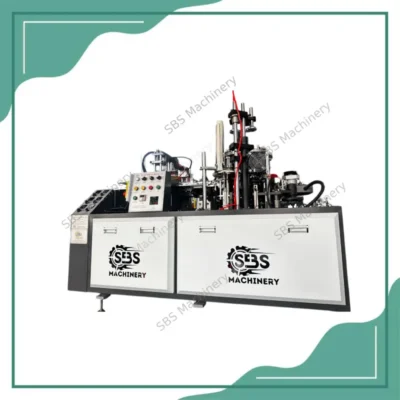
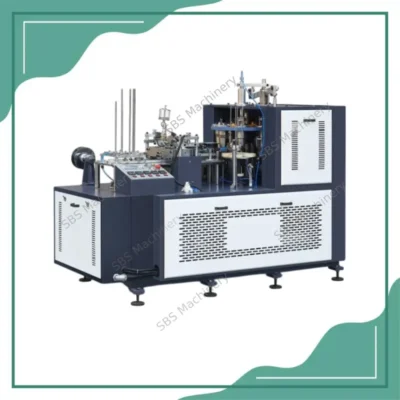
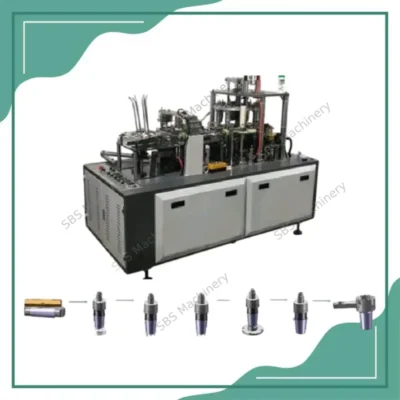
As a trusted Paper Cup Making Machine Manufacturer, SBS Machinery has been a pioneer in providing fully automatic solutions tailored to modern manufacturing needs. This blog explores why choosing fully automatic paper plate machines is essential for scaling production, reducing costs, and ensuring quality.
1. Increased Production Capacity
Fully automatic paper plate machines drastically increase production output compared to manual and semi-automatic systems.
- High-Speed Operations: These machines can produce 5,000–10,000 plates per hour, depending on model and paper specifications.
- Continuous Production: Automated feeding, pressing, and stacking allow uninterrupted operation, reducing production delays.
- Bulk Order Fulfillment: Manufacturers can handle large orders efficiently, meeting peak seasonal or event-driven demand.
Case Example: A medium-sized paper plate manufacturer upgraded to SBS Machinery’s fully automatic machine, increasing output from 2,000 plates/hour to 6,500 plates/hour, allowing the company to take on large catering contracts they previously had to decline.
Technical Note: Machines are equipped with synchronized pressing and stacking mechanisms, ensuring precise handling at high speeds without product damage.
2. Consistent Quality & Precision
Uniformity in size, thickness, and finish is crucial for product credibility. Fully automatic machines deliver:
- Precision Bending and Pressing: Every plate has identical dimensions, thickness, and edge smoothness.
- Advanced Molding Systems: Ensure high-quality impressions and embossing when required.
- Reduced Defect Rates: Manual production can result in 5–8% defective plates, semi-automatic 2–3%, while fully automatic systems maintain <1% defects.
Real-World Benefit: Restaurants and event managers receive plates that are consistent in shape and strength, enhancing presentation quality and customer satisfaction.
3. Reduced Labor Costs
Fully automatic machines significantly minimize the need for manual labor.
- Operational Efficiency: One operator can supervise multiple machines simultaneously.
- Lower Labor Dependency: Less need for skilled manual workers reduces recruitment and training costs.
- Safety and Ergonomics: Reduced manual handling decreases workplace fatigue and injury risk.
Case Study: A manufacturer reduced labor costs by 40% annually after switching to fully automatic machines, reallocating workforce to packaging and logistics, boosting overall operational efficiency.
4. Faster Turnaround Time
Speed is a competitive advantage in manufacturing:
- Automated Processes: Feeding, pressing, and stacking occur simultaneously, cutting production cycle times dramatically.
- Quick Size Changeover: Fully automatic machines allow rapid adjustments to different plate sizes and designs.
- Meeting Bulk Deadlines: Essential for catering companies, hotels, and festival seasons.
Example: An event catering supplier fulfilled last-minute orders of 50,000 plates without overtime by using SBS Machinery’s fully automatic system, increasing client trust and repeat business.
5. Energy Efficiency
Modern fully automatic machines are designed to minimize energy consumption:
- Optimized Motors and Heating Elements: Consume less electricity per 1,000 plates produced.
- Eco-Friendly Operations: Reduced energy use aligns with sustainable manufacturing goals.
- Cost Savings: Decreased electricity bills improve overall profitability.
Insight: Manufacturers report 20–25% lower energy consumption compared to older semi-automatic machines.
6. Minimal Material Wastage
Material efficiency is critical for cost management and sustainability.
- Precision Cutting: Automated systems ensure exact paper usage per plate.
- Reduced Scrap: Advanced feeding and stacking minimize misalignment and product damage.
- Sustainable Manufacturing: Less paper waste supports eco-friendly practices.
Example: A mid-sized unit reduced paper wastage by 10 tons per year, significantly cutting raw material costs.
7. Versatility & Flexibility
Fully automatic machines handle a variety of production requirements:
- Different Plate Sizes: Small, medium, and large plates on the same machine.
- Material Variety: Coated, uncoated, and recycled paper types.
- Branding Options: Embossing or printed designs for corporate clients.
Impact: Businesses can serve multiple market segments without investing in separate machinery.
8. Reduced Downtime & Maintenance
Durable engineering reduces operational interruptions:
- High-Quality Components: Resistant to wear and tear.
- Automated Lubrication Systems: Reduce manual maintenance requirements.
- Quick-Access Design: Simplifies cleaning, servicing, and minor repairs.
Case Study: Manufacturers report 30% less downtime annually compared to semi-automatic machines, ensuring uninterrupted production schedules.
9. Improved Safety Standards
Worker safety is paramount in automated production:
- Enclosed Mechanisms: Prevent accidental contact with moving parts.
- Emergency Stop Functions: Immediately halt operations in case of hazard.
- Sensor-Based Controls: Detect anomalies and prevent machine misuse.
Benefit: Reduced workplace injuries and compliance with industrial safety standards.
10. Long-Term Return on Investment (ROI)
While fully automatic machines require higher initial investment, long-term gains outweigh costs:
- Increased Production Capacity: Higher revenue from more plates produced per hour.
- Labor & Energy Savings: Lower recurring operational costs.
- Reduced Material Waste: Improved profitability per unit.
- Consistent Quality: Enhances brand reputation and repeat orders.
ROI Example: Medium-scale manufacturers achieve full ROI in 12–18 months, with continued savings and higher productivity beyond that.
Conclusion
Fully automatic paper plate machines are no longer a luxury but a necessity for manufacturers aiming to compete in a growing, eco-conscious market. They provide:
- Higher production capacity
- Consistent quality
- Reduced labor and energy costs
- Minimal material wastage
- Enhanced safety and sustainability
- Significant ROI
As a trusted Paper Cup Making Machine Manufacturer, SBS Machinery offers fully automatic paper plate machines that empower businesses to scale efficiently, reduce costs, and maintain premium quality standards.
Investing in fully automatic machines today ensures future-proof, sustainable, and profitable operations in the paper plate manufacturing industry.



Leave a Reply